




Dialogue Framework

The relevant departments serve as primary points of contact and collaborate closely to conduct constructive dialogue with shareholders and investors.
Furthermore, insights and information obtained through these engagements are promptly shared with management.

Investor Engagement

Specific Dialogue Methods
Attendees: Frequency:Number and number of interviews (total)
General Meeting of Shareholders

CEO(Chairman), All Directors

Once a year
Financial Results Briefing(for Institutional Investors)

CEO, CFO, Division Manager

Twice a year
Institutional Investor Visits

CEO, CFO,
Department Manager of Corporate Communication Office

FY03/2025 FY03/2026
15 companies 17 companies
Individual Meetings(including face-to-face and web conferences)

Corporate Communication Office

167 meetings 155 meetings
Business site tour(for Institutional Investors)

CFO
Division Manager

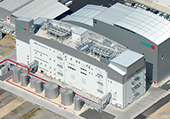
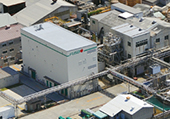
every two years Kashima Plant
Electronic Materials

Key Discussion Points from IR Meeting

■ Business Strategy

  • Confidence in achieving the plan, core themes of the next Medium-Term Management Plan
  • Progress of the “3rd Pillar” of the Medium-Term Management Plan, outlook for new businesses and products
  • Competitive advantages, barriers to entry, growth trends, and technological innovation
  • Semiconductor/CMP market conditions and 5- 10 year outlook
  • Sales (market expansion / market share growth / pricing strategy / customer selection)
  • Profit (efficiency improvements, cost reductions, value added, risk mitigation)

■ Individual Segment

  • Progress of negotiations on strategic pricing increases (to cover new investment costs)
  • Current production capacity and operating status of capacity expansion facilities
  • Progress in the shift to high-concentration products and efficiency, growth prospects for new applications
  • Measures to improve profitability in the fruit acid business
  • Market share, pricing, and demand trends for core products
  • Impact of the Middle East situation, procurement of key raw materials, and production capacity response to increasing demand

■ Cash Allocation

  • Balance between growth investments and shareholder returns, M&A potential, and R&D strategy
  • Measures to mitigate the increased depreciation burden resulting from capital expenditures
  • ROIC / ROE, capital allocation, and key performance indicators (KPIs)

■ Sustainability

  • Succession planning for the next top management (executive team): Selection criteria
  • Status of initiatives in human capital management, including talent acquisition
  • Initiatives and disclosure status related to climate change

Feedback to Management

Feedback to Management
Frequency Reporting Format Content
One-on-one IR meetings with analysts and investors Monthly Meeting

・Key questions and discussion highlights from meetings

・Number of meetings and participants

Analyst Report Quarterly E-mail

・Summaries of analyst reports issued by securities firms

Equity-related indicators and information Monthly As needed E-mail

・Trends in our shareholder base

・Sharing industry indices from external evaluation and rating agencies

IR Activity Report Monthly As needed Meeting/
E-mail

・Sharing key achievements, challenges and goals for the next fiscal year

Meeting Framework:Board meeting/Executive meeting/Administrative departments meeting(every month)
Corporate Management meeting(every quarter) Annual Management Conference (in March)

Examples of Initiatives Based on Investor Dialogue

Business StrategyMedium-Term Management Plan

Investor Questions/Requests
Will the next medium-term plan be a 3-year or 5-year plan?
Request: If growth investments remain the top priority, outline your cash allocation strategy.
Answer/Initiatives
  • We’ve formulated a 5-year plan to demonstrate growth from a mid-to long-term perspective, even though we may be affected by short-term fluctuations in market conditions. In this plan, we’ve outlined a cash allocation strategy that defines the scale of growth investments, and our shareholder return policy. We will focus on executing the plan to ensure that growth and returns are delivered in line with the level of investment.

Financial StrategyCapital Investment and Depreciation

Investor Questions/Requests
Request: To ensure steady corporate growth, shift toward a management structure that allows not only EBITDA (current key performance indicator) but also operating profit to grow, even as investment levels continue to rise.
Answer/Initiatives
  • We have conducted ongoing negotiations with customers to secure partial cost sharing for upcoming capital expenditures, resulting in price revisions of 5?10% starting in FY2026.
  • To offset the increased depreciation burden from capital investments at an early stage, We’ll shorten the lead time from certification to product adoption and further enhance production.

Trends in Individual SegmentProduction capacity(Electronic Materials)

Investor Questions/Requests
With strong demand in the semiconductor market, won’t you run out of production capacity before the next capital investment completes?
Answer/Initiatives
  • Facilities that have been completed are gradually commencing production once customer certification is obtained, and we are establishing an efficient a mass production system.
  • In addition, by increasing the production of high-concentration products, we aim to manufacture more volume of products within the same time and better meet growing demand.

Updated June 09, 2026